
Mould on House Exteriors Through the Wet Season
Why FNQ walls green up in a single wet season, and what the growth is really feeding on.
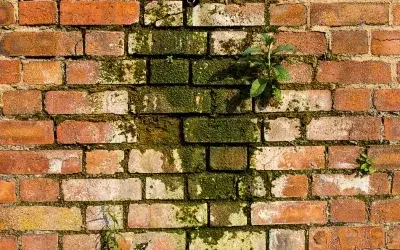
It is not the rain, it is the hours of wetness
People assume the monsoon rain is what grows the mould. Rain helps, but it is not the mechanism. Mould needs a surface to stay wet, and how long it stays wet matters far more than how much water landed on it. A wall hit by a heavy afternoon downpour in February and then dried by wind and sun within an hour is doing better than a shaded wall that never gets rained on directly.
Through a Cairns summer, overnight humidity regularly sits high enough that wall surfaces cool below dew point after dark and hold visible moisture until mid morning. That is six or eight hours of wet surface, every night, with no rain involved at all. Add a monsoon trough sitting over the coast for a week and the surface simply never dries. That is the growing condition, and it is why a wall can green up in a single season here and take five years to do the same thing further south.
What it is actually eating
Mould and algae are not eating your paint, at least not at first. They are living on a thin organic film that settles on every exterior surface: airborne dust, pollen, sea salt, exhaust particulate, and organic matter dropped by whatever is growing overhead. That last one matters more than people think. Sugary honeydew dripping from insects in a mango, poinciana or fig above the house is a direct food supply, which is why the wall under a tree goes first and goes worst, even where the tree keeps the rain off it.
Render is particularly good habitat. The texture holds both the film and the moisture, and once growth is established the surface holds water longer, which accelerates the next round. Colorbond and smooth painted surfaces shed better, but they still collect the same film in the shade and along the bottom of walls where splash-back throws soil up.
Why the south wall is always the worst
In the southern hemisphere the south facing wall gets the least direct sun year round, so it dries slowest and stays coolest. That is where the green shows up first on almost every house. Wide eaves, which are exactly what you want on a Queenslander, also mean the wall underneath rarely gets a proper wash from rain, so the film builds up undisturbed.
Elevation changes the picture too. Up on the Atherton Tablelands the rain totals can be lower than the coast but the morning fog and cooler nights keep surfaces damp far longer, so mould pressure is often worse, not better.
Once you think in hours of wetness rather than millimetres of rain, the pattern on a house stops looking random.
| Where on the house | Why it stays wet | What you tend to see |
|---|---|---|
| South facing wall | Least direct sun all year, so it dries slowest and runs coolest | Green appears here first on almost every house, usually at eye height and below |
| Directly under wide eaves | Sheltered from the rain that would otherwise wash the film off | A band of build up on an otherwise clean wall, worse where the eave is widest |
| Under a mango, poinciana or fig | Shade plus honeydew dripping from insects in the canopy, a direct food supply | The dirtiest section on the house, often on a wall that never gets rained on |
| The bottom of any wall | Splash-back throws soil and organic matter up during downpours | A dark line rising a few hundred millimetres off the ground, right around the house |
| Behind shrubs or a close fence line | Air cannot move, so the surface holds dew until late morning | Growth in the shape of whatever is planted in front of it |
| Textured render anywhere | The texture holds the film and the water, then holds water longer once growth starts | Even coverage rather than patches, and it comes back faster each time |
| Exposed north or west wall | Sun and wind dry it within an hour or two of rain stopping | Often stays presentable for years while the south side is green |
| Tablelands property in morning fog | Lower rain totals, but far longer surface wetness overnight | Worse than the coast despite the smaller rainfall figure |
What actually works on it
The common approaches sort themselves out quickly once you accept that this is an organism rather than dirt:
- Scrubbing with a broom and hosing removes the visible layer and leaves the organism in the pores, so it is back within weeks and the wall looks patchy in the meantime
- High pressure on painted render does the same thing, faster, while risking water in the sheet joins and lifting the coating at the edges
- Household bleach straight out of the bottle runs off a vertical wall in seconds, so it never gets the contact time it would need to work
- Anything that only addresses colour, rather than the organism, is buying weeks rather than seasons
What actually works is unglamorous. The growth is killed with the right chemistry applied at low pressure, held on the surface long enough to act, and then rinsed. A surfactant in the mix is what makes that possible on a wall, because it thickens the solution so it clings instead of running to the ground.
There are also a few things that shift the odds between cleans, and they all come back to drying time:
- Cut back branches that overhang or touch the house, particularly anything dropping honeydew
- Pull shrubs and pot plants back off the wall so air can move behind them
- Fix any downpipe, tap or air conditioner drain that discharges onto a wall rather than away from it
- Clear the gutter that is overflowing down one section of wall every time it rains hard
- Time the clean for after the wet rather than before it, so the result holds through the dry
Mould and algae removal covers the method. Call 07 4028 4268 and describe which walls are affected.
-
The Benefits of Regular Pressure Washing
Washing on a schedule is cheaper than waiting until the growth is obvious, and here is why.
-
What Drives the Cost of Pressure Washing in Cairns
The five things that decide what a wash costs, and why area is not one of them.
-
Signs Your Roof Needs Cleaning
How to read a Cairns roof from the ground, and when washing it is no longer the right call.
Get a free quote
No obligation, and a straight answer about whether the job is worth doing.
- Hours
- Weekdays 8 to 5
- Covers
- Cairns and the northern beaches corridor
- Quotes
- Free, from photos or on site
- Photos beat descriptions. Two shots of the dirty area and we can quote most jobs same day.
- Roof, driveway and house washing get different pressures and different chemistry, and the quote says which.
- One figure for the whole job. Nothing gets added once we are up the ladder.