
Signs Your Roof Needs Cleaning
How to read a Cairns roof from the ground, and when washing it is no longer the right call.
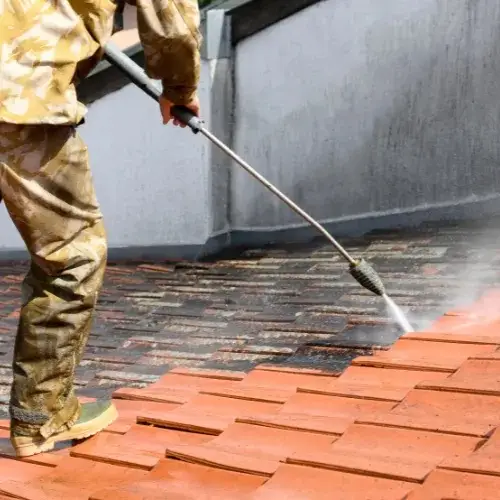
You cannot see the part that matters
Almost nobody looks at their own roof. You see it from the driveway at a bad angle, and the section that holds the most growth, the shaded southern pitch, is usually the one you never get a view of. So the first sign is often something other than the roof itself.
The easiest check needs no ladder. Stand across the road, or better, look at your roof from a neighbouring driveway or the far side of the yard where the low pitch is visible. Then look at the gutters.
The signs that are worth acting on
Almost all of it can be read from the ground, provided you know which of these things is cosmetic and which is not.
| What you can see from the ground | What it actually is | What it means |
|---|---|---|
| Dark streaks running downhill from the ridge caps | Gloeocapsa magma, a cyanobacteria feeding on mineral content in the tile | Cosmetic at first, but it spreads with every rain and takes longer to shift the further it gets |
| Green or grey crusty patches with a slightly raised edge | Lichen | It grips into the surface rather than sitting on it, so it needs a longer dwell and often a second application |
| Spongy growth sitting in the overlap between tiles | Moss in the laps | The one to take seriously, because water held at a lap can draw back under the tile against gravity |
| Growth on the low pitch of a Colorbond roof, or under a neighbouring tree | Metal staying damp for hours after the rain stops | Where surface corrosion starts, and it usually starts at the fixings |
| Fine gritty sand-like sediment in the gutters | The tile surface itself breaking down | A different message to a dirty roof. It wants looking at, not just washing |
| Leaf litter and twigs in the gutters | Ordinary debris | A gutter clean rather than a roof clean, though the two are often worth doing together |
| Tiles that crumble at the edges, or ring dull when tapped | A porous, chalky roof near the end of its life | Washing spends money on a surface that needs replacing |
| Green on the pitch you can see from the street | The mildest face of the roof, usually | Whatever you can see, the shaded southern pitch is worse |
Dark streaking running downhill from the ridge caps is the classic one. That is gloeocapsa magma, a cyanobacteria that feeds on the mineral content in the tile and spreads with rainwater running down the slope, which is why the streaks are vertical and start at the top. It looks like dirt and is not.
Green or grey crusty patches with a slightly raised edge are lichen, and they matter more than the black staining because lichen grips into the surface rather than sitting on it. Spongy growth sitting in the overlap where one tile sits on the next is the one to take seriously. Moss in the laps holds water permanently, and water held at a lap can draw back up under the tile against gravity, which is how a roof with no broken tiles still manages to wet the sarking.
On Colorbond, watch the low pitch sections and the areas shaded by a neighbouring tree. Metal that stays damp under a film of growth for hours after the rain stops is where surface corrosion starts, usually at the fixings first.
Then there is the gutter test. If your gutters are filling with fine, gritty, sand-like sediment rather than leaf litter, that grit is the tile surface itself breaking down. That is a different message to a dirty roof, and it means the roof should be looked at rather than just washed. Leaf litter is the ordinary case and belongs with gutter cleaning instead.
When cleaning is not the answer
A roof that has gone porous and chalky, where tiles crumble at the edges or ring dull when tapped, is at the end of its life. Washing it spends money on a surface that needs replacing, and heavy handling can break more tiles than it saves. We would rather say so at the quote than take the job.
Cleaning is usually the wrong spend when:
- Tiles crumble at the edges, or ring dull rather than sharp when tapped
- The gutters are carrying tile grit rather than leaf litter
- Tiles are already cracked or slipped, which is a job for a roofer before anyone walks on it
- The roof is leaking now, since a wash will not fix a leak and may well make it worse in the short term
- A re-roof is already planned inside the next year or so
The same goes for high pressure on a tiled roof generally. Direct pressure strips the factory glaze, drives water up under the laps, and buys you a leak that was not there before. Roofs get soft washed instead, at low pressure, so the growth is killed and rinsed rather than blasted off.
Timing it
The wet season from December through March is what feeds all of this, so the sensible time to look is autumn, once the monsoon troughs have finished and before the growth has a full dry season to settle in. If any of the above matches what you can see, roof cleaning explains the method, or call 07 4028 4268 and we will come and look properly.
-
The Benefits of Regular Pressure Washing
Washing on a schedule is cheaper than waiting until the growth is obvious, and here is why.
-
What Drives the Cost of Pressure Washing in Cairns
The five things that decide what a wash costs, and why area is not one of them.
-
Soft Washing vs Pressure Washing
One removes growth with force, the other kills it with chemistry. The surface decides which.
Get a free quote
No obligation, and a straight answer about whether the job is worth doing.
- Hours
- Weekdays 8 to 5
- Covers
- Cairns and the northern beaches corridor
- Quotes
- Free, from photos or on site
- Photos beat descriptions. Two shots of the dirty area and we can quote most jobs same day.
- Roof, driveway and house washing get different pressures and different chemistry, and the quote says which.
- One figure for the whole job. Nothing gets added once we are up the ladder.