
The Benefits of Regular Pressure Washing
Washing on a schedule is cheaper than waiting until the growth is obvious, and here is why.
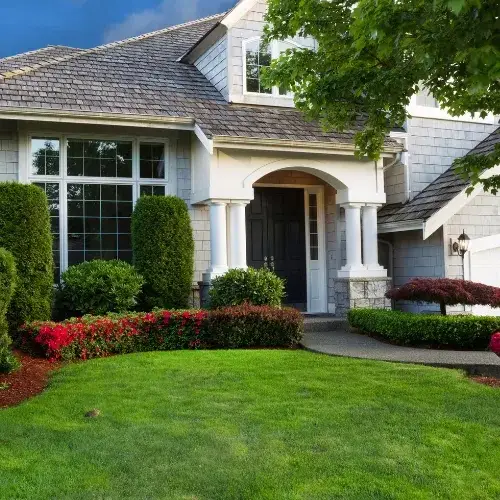
Cleaning on a schedule versus cleaning when it looks bad
Most people ring about a wash when the shaded wall has gone visibly green or the driveway has turned from grey to almost black. That works, but it is the expensive way to run a house in the tropics. By the time growth is obvious it has been established for a year or more, and shifting it takes longer, needs stronger chemistry, and leaves a patchier finish than the same job would have at the six month mark.
Regular washing is not about the place looking freshly done every week of the year. It is about never letting growth get past the point where it is still sitting on the surface.
Growth does slow structural work
Mould and algae sit on top of a surface. Lichen does not. Lichen anchors itself with rhizines, fine root-like threads that work down into the pores of render, into the glaze on a concrete roof tile, into the grain of untreated timber. Given a few years those threads etch a texture into the surface. Once that texture exists, water sits in it, and the next colony takes hold faster than the first one did. That is the part most people miss. A wall left to go badly green will go green again sooner after cleaning than a wall that was kept on top of.
Salt behaves in a similar way. Homes within a few kilometres of the water carry a constant salt load, and salt trapped under a layer of biological film against Colorbond, aluminium window frames or steel fixings holds moisture against the metal long after the surface looks dry to the touch. Washing that film off is a corrosion measure as much as a cosmetic one.
It helps to separate the things growing on a house, because they do not all behave the same way and only some of them do damage.
| What is growing | Where it turns up first | What it does if it is left |
|---|---|---|
| Algae and mould | Shaded walls, the bottom of walls where splash-back reaches | Sits on top of the surface and holds moisture against the paint film. Comes off easily while it is still surface growth |
| Lichen | Render, roof tiles, untreated timber, fence rails | Anchors into the pores with rhizines and etches a texture that holds water, so the next colony arrives faster than the first |
| Moss | Roof tile laps, the shaded low pitch, along gutter lines | Holds water permanently at the lap, and water at a lap can draw back under the tile against gravity |
| Dark roof streaking | Tiled roofs, running downhill from the ridge caps | Largely cosmetic early on, but the longer it stays the longer the dwell time needed to shift it |
| Salt and dust film | Colorbond, window frames and fixings within a few kilometres of the water | Traps moisture against metal long after the surface feels dry, which is a corrosion path rather than a stain |
The first row is the only one that is purely cosmetic, and it is also the only one that stays cheap to deal with. Everything below it gets harder the longer it sits.
What it does for paint
Exterior paint on a Cairns house is already working hard. UV all year, driving rain from December through March, and humidity in between. Biological growth on top of the paint holds moisture against the film permanently, and a permanently damp film starts losing adhesion at the edges first. On weatherboard and fibro that shows up as lifting along the bottom lip of each board, usually on the south side, long before the rest of the wall looks tired.
Keeping growth off will not make a paint job last forever. It is one of the few maintenance jobs that genuinely stretches the interval between repaints, and it costs a small fraction of what a repaint does.
A sensible interval up here
For most homes around Cairns, walls washed every twelve to eighteen months keeps things simple, and the dry, roughly May through October, is the sensible window because the result holds longer.
Take the shorter end of that range if:
- The wall faces south, or sits under wide eaves that keep rain off it
- There is a mango, poinciana or fig overhanging the house, since honeydew dropping from it is a direct food supply
- The property is on the Tablelands or anywhere else that sits in morning fog
- You are within a few kilometres of the water and the metalwork matters to you
- Growth came back quickly after the last clean, which usually means it was left too long the time before
The longer end, or beyond it, is reasonable where the wall is exposed and sunny, gets a clear run of afternoon wind, has nothing growing over it, and dries out within an hour or two of rain stopping.
If you are unsure which category your place falls into, walk around to the shaded side. That wall sets the schedule for the whole property. Residential pressure washing covers what that involves, or call 07 4028 4268 and describe what you are looking at.
-
What Drives the Cost of Pressure Washing in Cairns
The five things that decide what a wash costs, and why area is not one of them.
-
Signs Your Roof Needs Cleaning
How to read a Cairns roof from the ground, and when washing it is no longer the right call.
-
Soft Washing vs Pressure Washing
One removes growth with force, the other kills it with chemistry. The surface decides which.
Get a free quote
No obligation, and a straight answer about whether the job is worth doing.
- Hours
- Weekdays 8 to 5
- Covers
- Cairns and the northern beaches corridor
- Quotes
- Free, from photos or on site
- Photos beat descriptions. Two shots of the dirty area and we can quote most jobs same day.
- Roof, driveway and house washing get different pressures and different chemistry, and the quote says which.
- One figure for the whole job. Nothing gets added once we are up the ladder.